At the Fondazione Biscozzi | Rimbaud, the exhibition Filippo de Pisis e les Italiens de Paris runs until May 10, 2026, igniting a unique season of Italian art between the 1920s and 1930s. It is an intimate journey through the Paris of the avant-gardes, where a group of Italian artists embraced freedom, dialogue, and Europe.
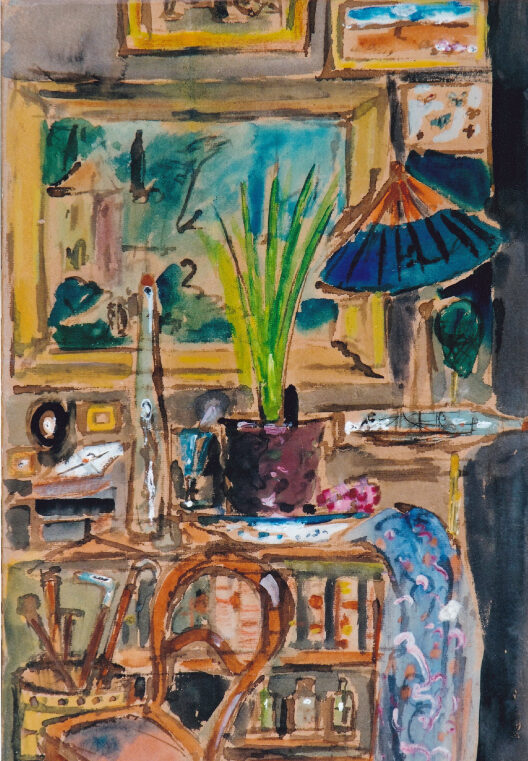
At the center stands the restless and luminous figure of Filippo de Pisis (Ferrara, 1896 – Milan, 1956), presented through more than twenty works, including the famous painting Dahlias (1932), part of the Fondazione’s permanent collection, which opens the exhibition like a gentle, melancholic breath.
Around him are the companions of the Groupe des Sept: Massimo Campigli, Giorgio de Chirico, René Paresce, Alberto Savinio, Gino Severini, and Mario Tozzi, active in the French capital, united by a position of gentle and conscious “fronde” against the dominant direction of Italian Twentieth-Century art.
Not just a simple alliance, but a community of gazes: a modern, Mediterranean classicism, anti-dogmatic. In an Italy looking toward monumentalism, they chose plural languages and international openness. The exhibition highlights their affinities and differences.
Accompanying the exhibition is a trilingual catalog published by Dario Cimorelli Editore. A brief but intense season. Like a stay in Paris that continues to vibrate on the canvas.
www.fondazionebiscozzirimbaud.it